
Problem Solver
Why Does My Watercolor Look Muddy?
Muddy color usually comes from unwanted neutralization or overworking, not from using the wrong brand. Diagnose pigment count, complementary relationships, contamination and timing first.
Mix fewer pigments, make the color you need before touching the paper, use clean water and palette space, and stop brushing a damp wash once it has begun to settle.
First: is the color actually muddy?
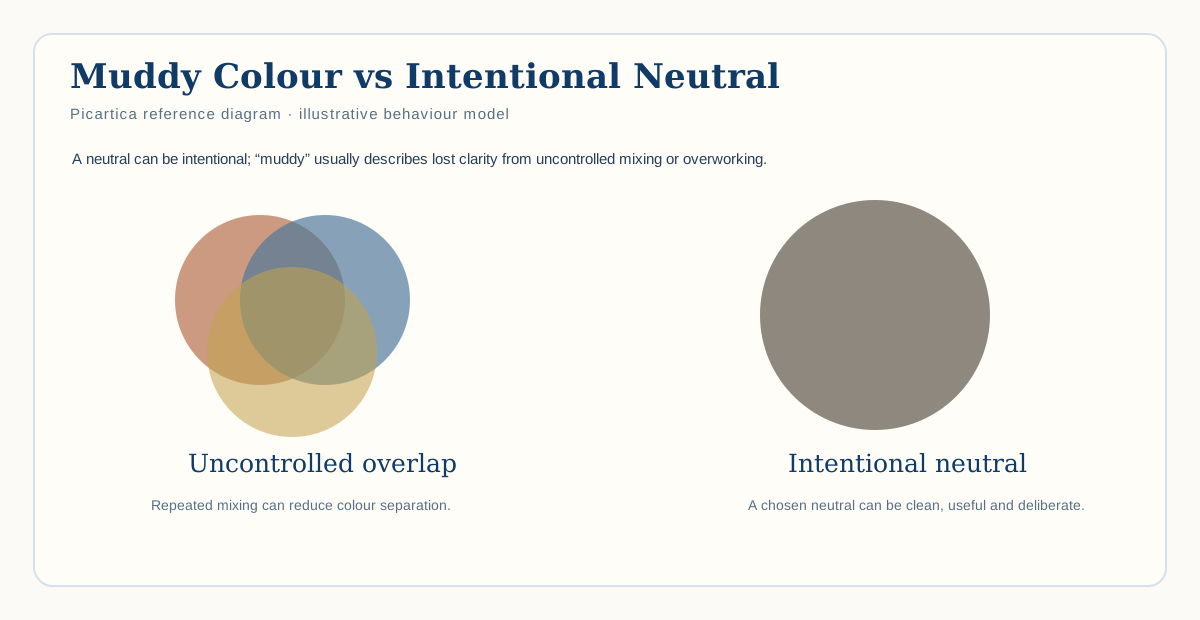
A neutral grey or brown can be beautiful when it is intentional. “Muddy” is more useful as a description of unwanted loss of clarity or saturation.
Too many pigments or complementary neutralization
Mixing colors on opposite sides of the color wheel reduces chroma. That can be useful, but it becomes a problem when the neutralization is accidental.
Also check what is actually inside each tube. Two convenience colors may already contain multiple pigments, so combining them can introduce more components than the marketing names suggest.
Overworking a damp wash
Two colors may begin mingling beautifully on wet paper. Repeated brushing physically redistributes them until the variation disappears and the mixture becomes more homogeneous and dull.
The awkward drying stage is especially risky: pigment has begun settling, yet the area is still moist enough for a new wet stroke to disturb it.
Dirty water, brush or palette
Pale colors are vulnerable to contamination. Grey rinse water, pigment trapped near the heel of the brush or dried color reactivated in the mixing well can shift a mixture before you notice.
How to fix mud already on the paper
- Stop brushing and let it dry.
- Evaluate again when the wet sheen is gone.
- Lift if the pigment and paper allow it.
- Use a deliberate glaze only if it genuinely improves the passage.
- Start again when continued correction adds more complexity than value.
Muddy vs neutral
| Neutral | Muddy |
|---|---|
| Reduced chroma used deliberately. | Unwanted loss of clarity or saturation. |
Mud is not a color. It is a color relationship that became more neutral than you intended.
Sources & verification
Core technical claims in this article were checked against the sources below. Picartica test protocols, editorial judgments and recommendations remain clearly separate from manufacturer claims.
- Winsor & Newton — Colour bias and mixingManufacturer education
Colour bias, clean green mixtures, and complementary contamination creating duller mixtures. - DANIEL SMITH — Watercolor Pigment CharacteristicsManufacturer data
Per-colour lightfastness, staining, granulation, transparency and pigment-code fields.
Verification status: core technical claims checked against the cited sources. Page structure, internal links and publication markup were re-audited for this release on 6 September 2026.