
Problem Solver
Why Does My Watercolor Look Streaky?
Visible bands usually mean the wash lost continuity: an edge dried, the brush was too small, concentration changed, or a partially dry area was reworked.
Prepare enough paint, use a brush large enough for the area, keep each stroke connected to the previous wet edge, and stop correcting passages that have already begun drying.
Cause 1: you lost the wet edge
A flat wash remains smooth when each new stroke connects to the previous damp edge. Pause too long and the earlier band begins drying; the next stroke becomes a new layer rather than a continuation.
Cause 2: the brush is too small
A small brush creates more strokes, more reloading and more time for previous sections to set. If large washes look streaky while small ones do not, test a larger brush before blaming your hand.
Cause 3: concentration keeps changing
Strong paint, then an exhausted brush, then extra clean water produces visible value differences even when the edges connect perfectly.
Cause 4: paper response or buckling
Uneven sizing can shorten the working window in specific areas. Severe buckling can also create valleys where liquid and pigment collect.
Can you fix a streaky wash?
If everything is still clearly wet, you may be able to continue the active bead. If parts have begun drying, leave them alone. After complete drying, a controlled glaze or selective lifting may help, but repeated scrubbing often worsens the surface.
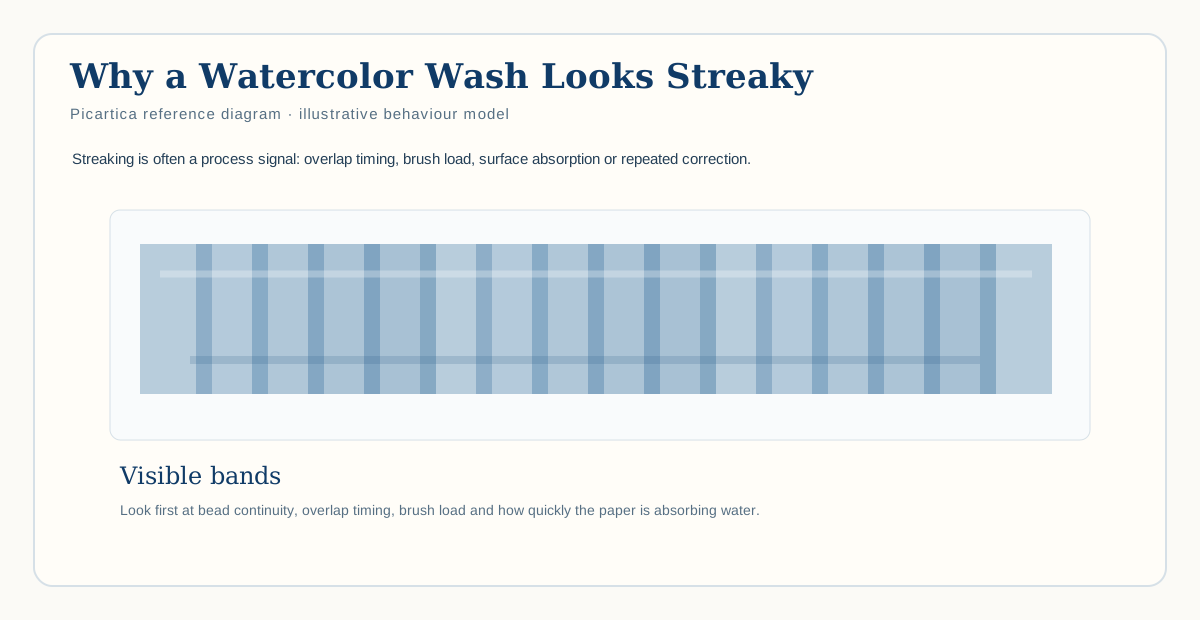
Four-cause diagnosis
Paint four rectangles: correct wet edge, deliberate pause, too-small brush, and changing concentration. The dried sheet becomes a visual troubleshooting reference.
A smooth wash is built by maintaining a moving wet edge—not by smoothing it repeatedly after it begins drying.
Sources & verification
Core technical claims in this article were checked against the sources below. Picartica test protocols, editorial judgments and recommendations remain clearly separate from manufacturer claims.
- Canson — Doing a flat washManufacturer education
Large flexible brush, continuous application, alternating strokes and overlapping the damp edge. - Canson — Selecting your watercolor paperManufacturer education
GSM definition, lighter-paper buckling, 300 gsm as a general compromise, paper textures and blocks.
Verification status: core technical claims checked against the cited sources. Page structure, internal links and publication markup were re-audited for this release on 6 September 2026.