
Technique
How to Paint a Flat Watercolor Wash
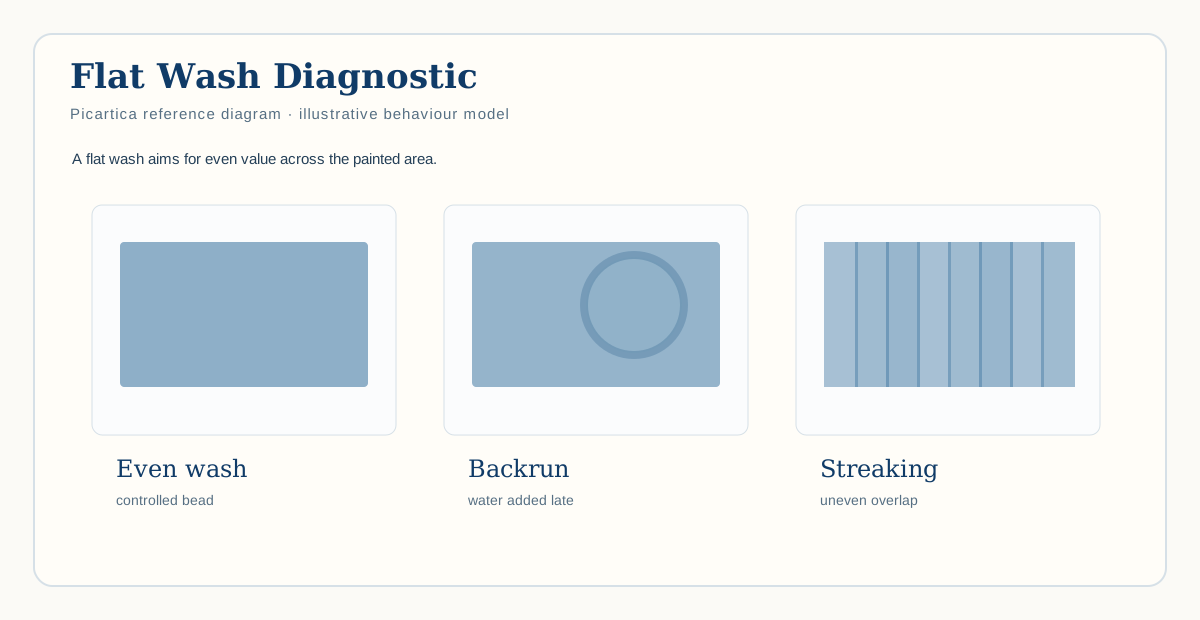
A flat wash is one area of relatively consistent color and value. The key skill is keeping one continuous wet edge while the wash is moving.
Prepare enough mixture, use a brush large enough for the area, keep the working edge wet, maintain similar concentration, and stop touching sections that have begun to dry.
Prepare the wash before you start
Many uneven washes begin with too little paint. If the mixture runs out halfway through, recreating exactly the same concentration while the paper dries is difficult. Mix more than you think you will need and test it on spare paper.
Use a brush large enough to carry useful liquid across the area. A tiny brush creates more strokes, more reloading and more chances for the wet edge to disappear.
Keep one moving wet edge
On slightly tilted paper, liquid may gather along the lower edge of the active wash. That reservoir is often called the bead. The next stroke should overlap it before it dries.
Think of the wash as one moving wet boundary rather than a stack of separate bands.
Keep the brush load consistent
A flat wash needs continuity in both moisture and pigment concentration. If one stroke is fully loaded, the next is exhausted, and the third contains extra clean water, visible bands can appear even when your timing is good.
Why flat washes become streaky
- Previous stroke dried before the next one arrived.
- Brush is too small.
- Paint concentration changes during the wash.
- You return to a section that has already begun setting.
- Paper buckles and liquid pools in low areas.
If you notice a pale spot near the top while the lower half is still wet, finish the wash first. Going back into a partially dry area often creates more damage than the original irregularity.
Four-rectangle wash exercise
- Use a too-small brush.
- Use an appropriate brush.
- Pause halfway and let the edge begin drying.
- Paint continuously with enough mixture.
Compare the dried bands. The exercise isolates the causes of streakiness.
A flat wash succeeds while it is moving. Most damage happens when you stop and then try to restart it.
Sources & verification
Core technical claims in this article were checked against the sources below. Picartica test protocols, editorial judgments and recommendations remain clearly separate from manufacturer claims.
- Canson — Doing a flat washManufacturer education
Large flexible brush, continuous application, alternating strokes and overlapping the damp edge.
Verification status: core technical claims checked against the cited sources. Page structure, internal links and publication markup were re-audited for this release on 6 September 2026.