Visual Reference
Watercolor Brush Shapes & What They Do
Brush shapes are shortcuts to families of marks. Learn what a round, mop, flat, rigger, dagger and filbert make easy instead of memorising a catalogue of names.
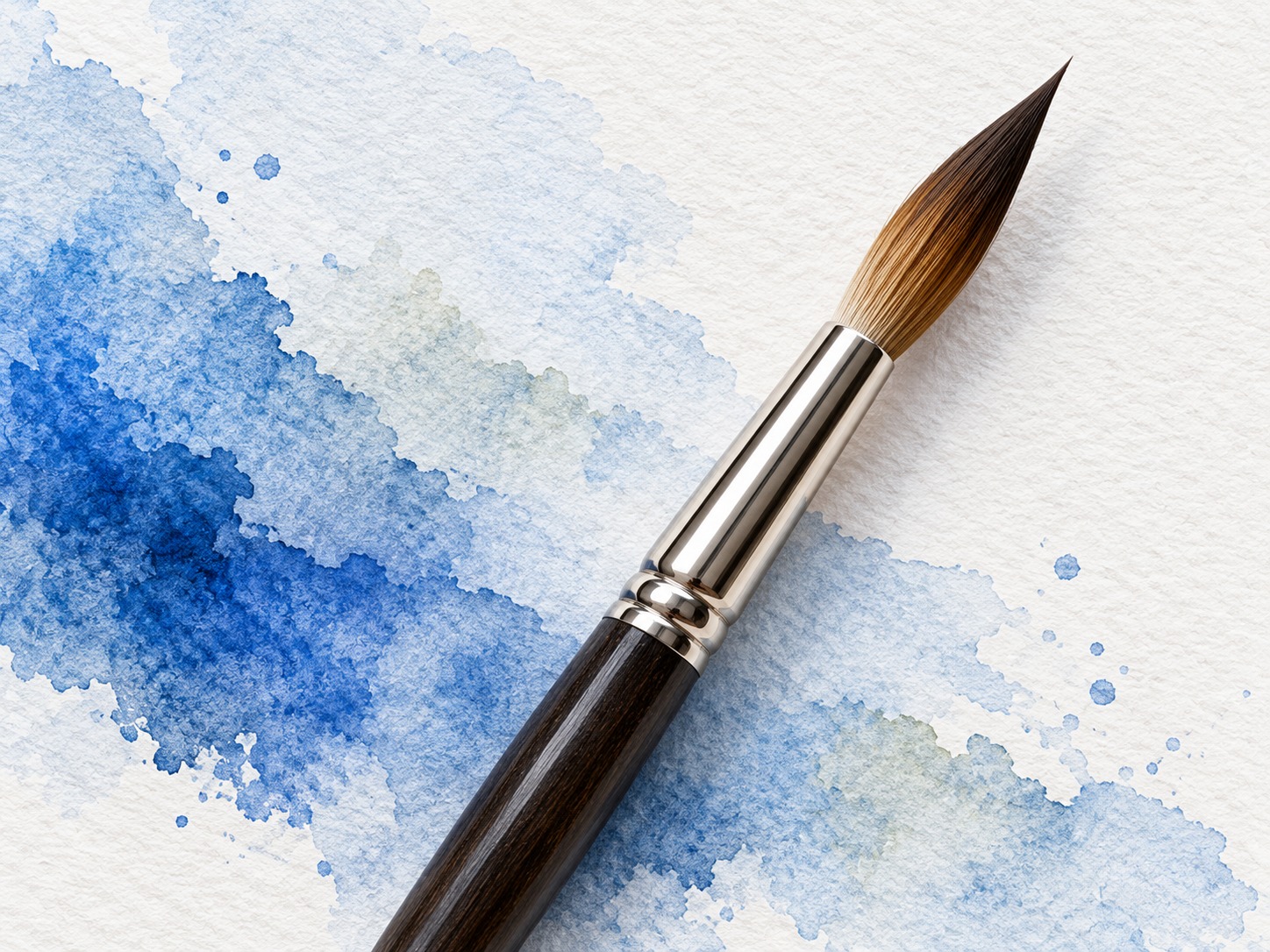
Round = versatility. Mop = capacity. Flat = geometry. Rigger = long lines. Dagger = expressive variation. Filbert = rounded coverage. The best shape is the one that makes the mark you need with the least unnecessary effort.
Round and pointed round
A round is one of the most versatile watercolor shapes. Pressure changes can take it from fine line to broad stroke, and a generous belly can carry enough water for small washes.
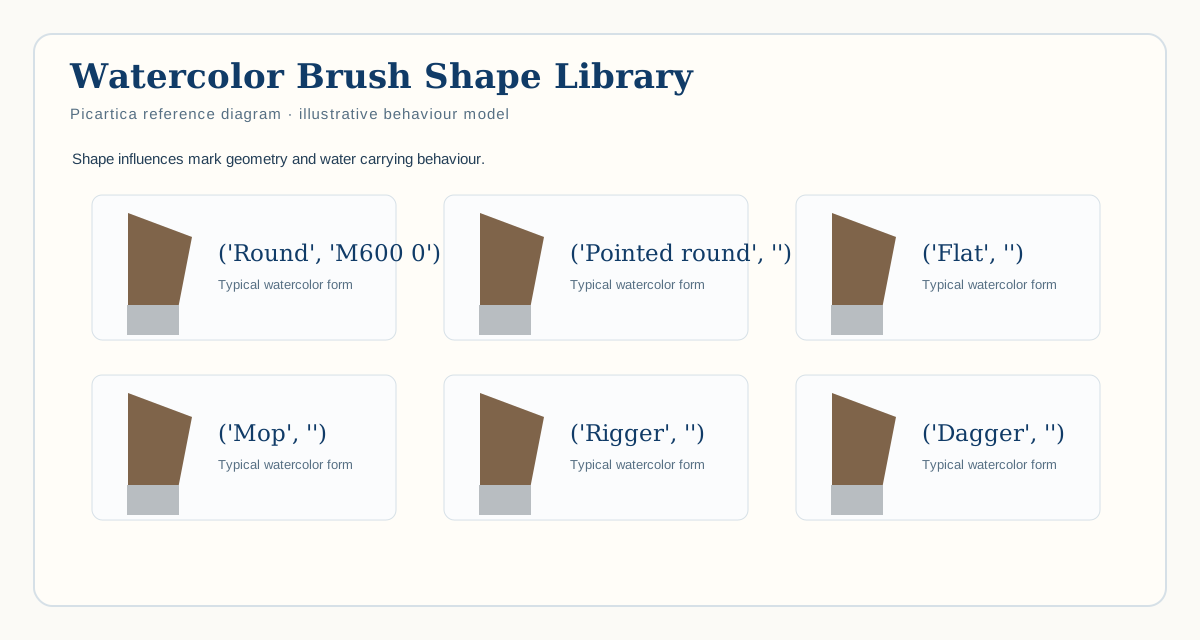
Pointed rounds emphasize the combination of a fine tip and substantial body, although exact naming varies between manufacturers.
Mop and quill
A mop is built around liquid capacity. Large soft tufts are useful for wetting areas, broad washes, skies and wet-on-wet work.
“Quill” often refers to a traditional construction style, though manufacturers do not use the term consistently. Picartica should preserve native product terminology and normalize the functional shape separately.
Flat and One Stroke
A flat creates broad bands and sharp geometric edges. Turn it on the narrow edge and it can also produce a much thinner mark.
This makes flats especially useful for architecture, rectangular shapes, broad washes and hard-edged passages.
Rigger and liner
A rigger has long narrow fibres designed to sustain fine lines over distance. It is useful for grasses, branches, wires, stems and other long linear marks.
A tiny round can make a thin line too, but a rigger often carries the line farther before the brush exhausts its paint.
Dagger, angular and filbert
Dagger brushes change dramatically with rotation and pressure, making them useful for expressive foliage, calligraphic marks and variable-width strokes. Angular brushes add a diagonal working edge. Filberts combine broad coverage with a rounded termination.
| Shape | Natural strength |
|---|---|
| Round | General-purpose marks |
| Mop | Large water capacity |
| Flat | Broad bands and geometry |
| Rigger | Long continuous lines |
| Dagger | Expressive changing-width marks |
| Filbert | Rounded broad forms |
How the Picartica Brush Library should work
Every brush should show its dry profile, wet loaded profile and standardized stroke family together. A photograph tells you what the brush looks like; a stroke tells you what it does.
Sources & verification
Core technical claims in this article were checked against the sources below. Picartica test protocols, editorial judgments and recommendations remain clearly separate from manufacturer claims.
- Winsor & Newton — Cotman Series 111 Round brushManufacturer
Round brush use for detail, lines, washes, broad strokes and forming a sharp point. - Winsor & Newton — Professional Watercolour Synthetic SableManufacturer
Synthetic brush colour-carrying capacity, spring and shape retention. - Escoda — Brush catalogueManufacturer catalogue
Independent absorption/stiffness ratings across fibres and multiple watercolour brush shapes.
Verification status: core technical claims checked against the cited sources. Page structure, internal links and publication markup were re-audited for this release on 6 September 2026.