
Technique
Wet-on-Wet Watercolor
Wet-on-wet is not simply “uncontrolled watercolor.” It is the deliberate use of paper moisture to change pigment movement, edge softness and color mingling.
Wet-on-wet means introducing watercolor into paper that already contains moisture. The wetter the surface, the farther pigment can generally move; damp paper gives more controlled softness than a visibly pooled surface.
“Wet” is not one condition
Watercolor paper moves through many moisture states: very wet, wet, damp, nearly dry and dry. The technique changes continuously as the sheet passes through them.
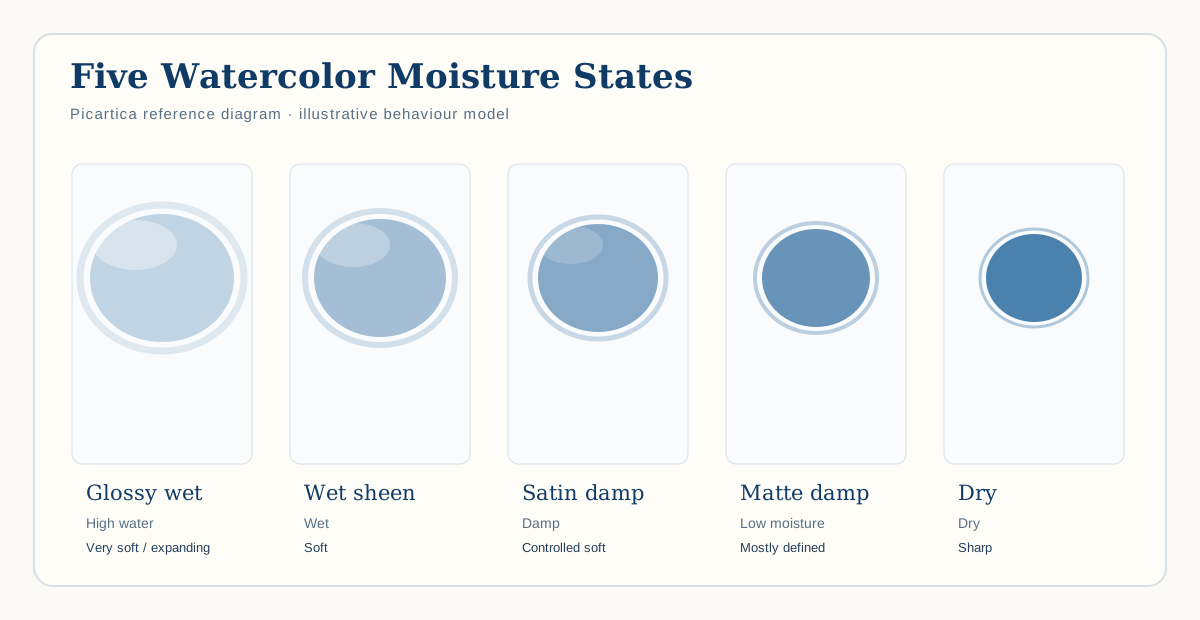
| Paper state | Likely behaviour |
|---|---|
| Very wet | Maximum movement and very soft edges. |
| Wet | Broad diffusion with some positional control. |
| Damp | Controlled softness and clearer shapes. |
| Nearly dry | Limited spread, approaching wet-on-dry. |
What happens when paint touches wet paper?
The pigment enters a connected film of moisture instead of creating the entire wet area itself. This gives it room to travel beyond the exact point where the brush first touched.
Brush moisture and paint concentration matter too. A watery brush entering damp paper introduces additional liquid; a more concentrated brush load may remain more contained.
Soft edges
A soft edge forms when pigment can transition into neighbouring moisture rather than stopping at a sharp boundary. The key is not simply “use more water,” but manage the moisture relationship between brush and paper.
You can also wet only a selected area, keeping diffusion local rather than soaking the entire sheet.
Color mingling
Place two colors into the same wet area and allow them to move toward each other. Resist the urge to stir everything repeatedly with the brush. Often the most interesting variation appears when you place, connect and observe.
Common wet-on-wet problems
- Everything spreads too far: paper or brush is wetter than needed.
- Nothing spreads: paper has dried too far or brush mixture is too dry.
- Color dries too pale: the paper already contains water, so use stronger paint.
- Unexpected blooms: a wetter stroke entered a wash that had already begun drying.
One pigment, four moisture states
Wet four rectangles at the same time. Apply the same pigment at very wet, wet, damp and nearly dry stages. Do not manipulate the marks afterward. Let the edge behaviour teach you the timing.
Wet-on-wet is not about losing control. It is about letting moisture become part of the mark.
Sources & verification
Core technical claims in this article were checked against the sources below. Picartica test protocols, editorial judgments and recommendations remain clearly separate from manufacturer claims.
- Canson — Basic concepts for painting with watercolorsManufacturer education
Wet-on-dry, wet-on-wet, wash, graduated wash and glazing definitions; practical wet/dry colour shift note.
Verification status: core technical claims checked against the cited sources. Page structure, internal links and publication markup were re-audited for this release on 6 September 2026.