Technique
How to Paint a Graded Watercolor Wash
A graded wash deliberately shifts from stronger to paler color while keeping the wet passage connected. It adds controlled concentration change to the flat-wash method.
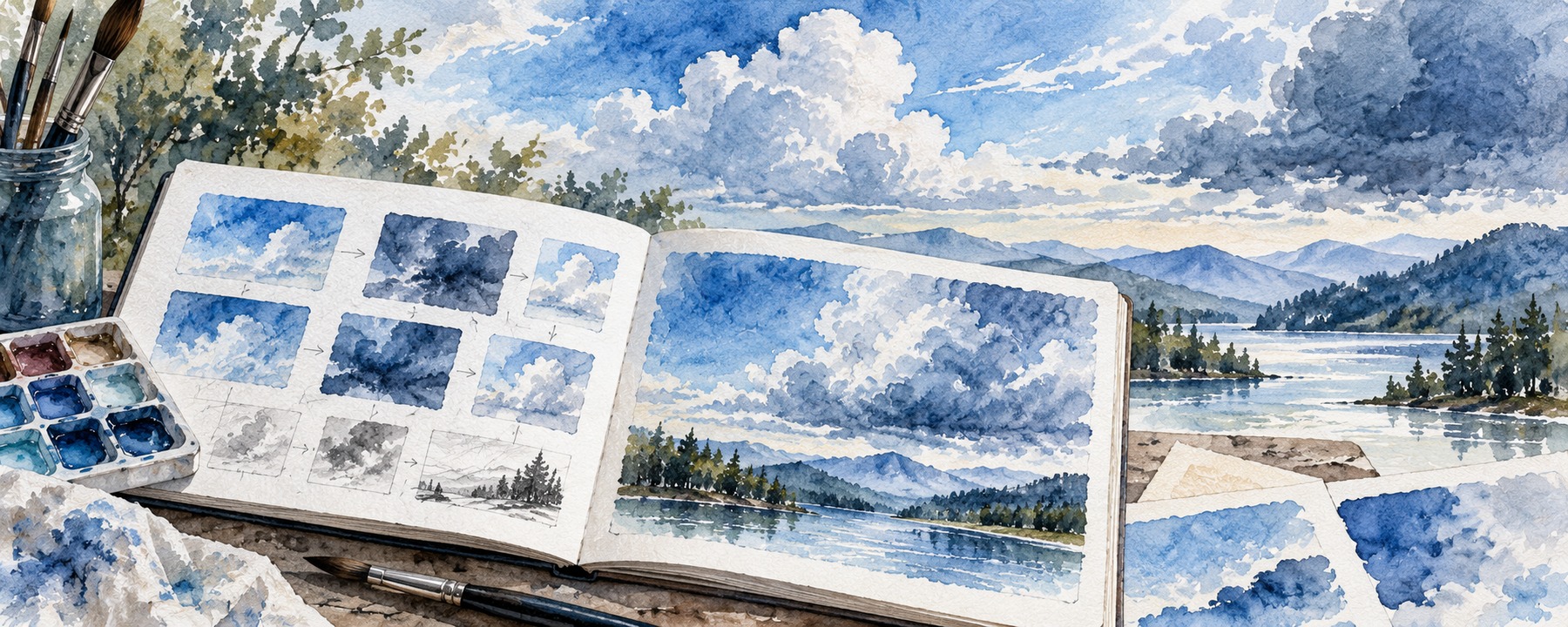
Start with a sufficiently strong mixture, keep the bead alive, and dilute in small steps while every new stroke still connects to the previous wet edge.
The basic graded-wash method
Prepare a strong mixture. Paint the first band, then introduce a little clean water into the mixture before painting the next connected stroke. Repeat while the previous edge remains wet.
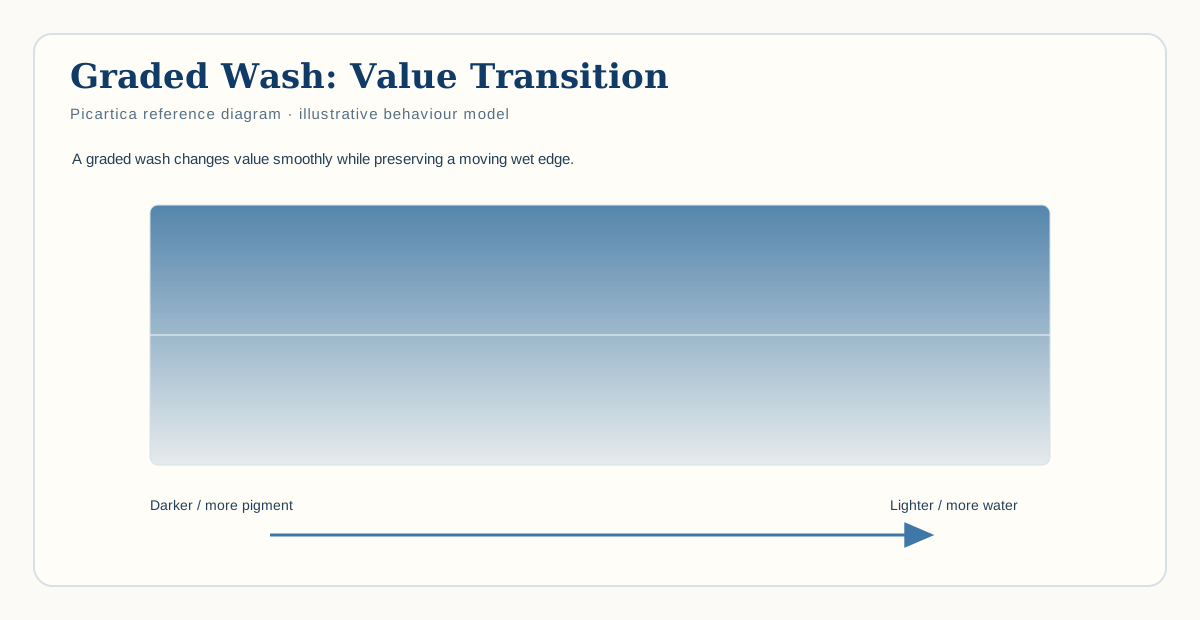
The color becomes progressively lighter because pigment concentration decreases, not because you are repeatedly brushing the same area.
Change concentration gradually
Large jumps create visible steps. Smaller dilution changes create smoother transitions. Think strong → medium-strong → medium → pale → very pale.
The exact endpoint is up to you. A graded wash does not have to fade all the way to white paper.
Gravity can help
A modest tilt can keep liquid moving toward the active edge, but excessive tilt or too much water can drag darker pigment farther down than intended.
Common problems
- Harsh horizontal line: the previous band dried too far.
- Sudden value jump: concentration changed too abruptly.
- Dark pigment sinks downward: too much tilt or too much liquid.
- Whole gradient dries too pale: the initial mixture was too weak.
Five-band exercise
Make five separate swatches from strong to very pale. Then use those approximate strengths in one connected gradient. The comparison shows the difference between steps and a true gradation.
Flat wash = maintain concentration. Graded wash = change concentration. Both depend on moisture continuity.
Sources & verification
Core technical claims in this article were checked against the sources below. Picartica test protocols, editorial judgments and recommendations remain clearly separate from manufacturer claims.
- Canson — Basic concepts for painting with watercolorsManufacturer education
Wet-on-dry, wet-on-wet, wash, graduated wash and glazing definitions; practical wet/dry colour shift note. - Canson — Doing a flat washManufacturer education
Large flexible brush, continuous application, alternating strokes and overlapping the damp edge.
Verification status: core technical claims checked against the cited sources. Page structure, internal links and publication markup were re-audited for this release on 6 September 2026.