Comparison
Watercolor Paint: Tubes vs Pans
Both formats can produce serious watercolor work. The useful difference is not prestige—it is how quickly and conveniently each format supplies the amount of paint your work needs.
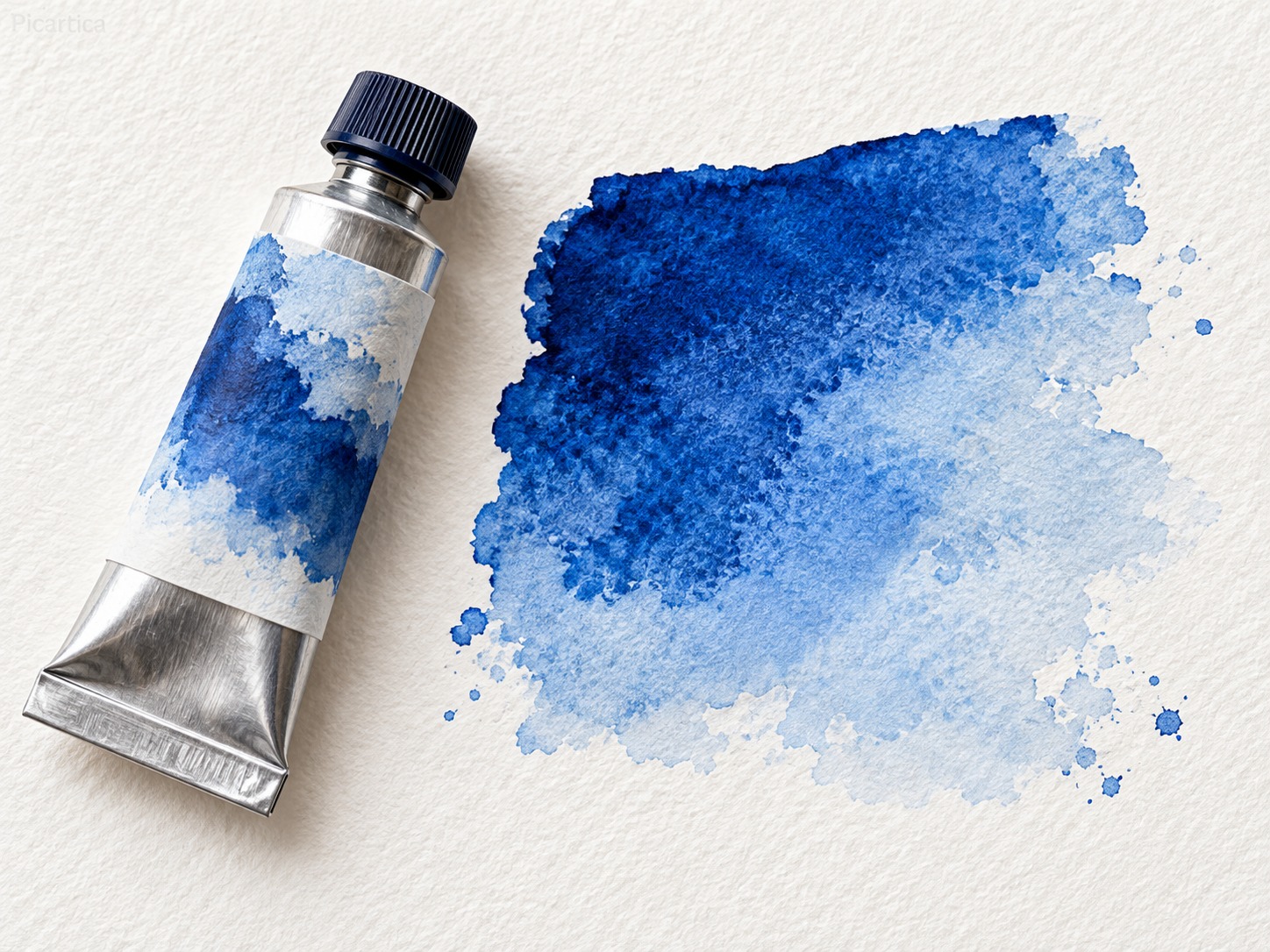
Choose pans for portability and fast setup. Choose tubes when you routinely need larger quantities, stronger mixtures quickly or large washes. Many artists use both.
What actually changes between tubes and pans?
A pan contains dried watercolor designed to be reactivated with water. Tube watercolor is stored as a moist paste. Both ultimately become a pigment-and-water mixture on the palette or paper.
The practical difference is access to quantity. A tube lets you dispense a substantial amount immediately. A pan asks you to rewet and load paint from a dry surface.
Is tube watercolor better quality?
Not necessarily. Packaging format and paint quality are separate questions. Some professional manufacturers use the same underlying formulation in tube and pan versions within a range, which is why the rule tube = professional, pan = student is unreliable.
Check the actual product range and pigment information instead of inferring quality from packaging.
Where pans are especially useful
- Portable sketching and travel.
- Fast setup and cleanup.
- Compact palettes.
- Small-to-medium paintings.
- Controlled incremental paint use.
If a dry pan feels hard to load, pre-wetting it briefly can soften the surface and make pigment pickup easier.
Why pans can feel weaker
A lightly touched dry pan naturally gives you less paint than a generous squeeze from a tube. That is often a loading difference rather than proof that the pan contains inferior pigment.
Where tubes are especially useful
- Large washes.
- Big brushes.
- Large paper formats.
- Strong mixtures prepared quickly.
- Custom palettes where selected colors are used heavily.
Tube paint can often be allowed to dry in palette wells and reactivated later, depending on the formulation. This lets many artists build a custom dry palette from tube colors.
| Question | Pans | Tubes |
|---|---|---|
| Portable? | Excellent | Less convenient |
| Fast setup? | Excellent | Good |
| Large wash preparation? | Possible, slower | Excellent |
| Large brushes? | Better with full pans | Excellent |
| Accidental over-dispensing? | Low | Higher |
| Travel sketching? | Excellent | Possible |
The hybrid approach
There is no prize for format purity. A compact pan palette can handle travel and small painting while selected tubes provide the colors you consume heavily in broad washes.
If one blue repeatedly disappears from your palette faster than everything else, keeping that blue in a tube can be practical even if the rest of the palette remains in pans.
Which should you choose?
Choose pans if…
You paint small, travel often, value fast setup and prefer a compact self-contained palette.
Choose tubes if…
You paint large, use big brushes, prepare substantial washes or want concentrated paint immediately.
Tubes and pans are delivery formats. They are not automatic measures of watercolor quality.
Sources & verification
Core technical claims in this article were checked against the sources below. Picartica test protocols, editorial judgments and recommendations remain clearly separate from manufacturer claims.
- Schmincke — Watercolour FAQManufacturer
Watercolour composition; HORADAM tube/pan same pigmentation; travel vs large-format packaging considerations; wetting/fingerprint guidance. - Schmincke — HORADAM AquarellManufacturer
Same formulation for pans/tubes; granulating and supergranulating colour definitions; rough paper/water influence. - DANIEL SMITH — Fill your own half pansManufacturer education
Filling pans from tube colour in layers and drying/rewetting workflow.
Verification status: core technical claims checked against the cited sources. Page structure, internal links and publication markup were re-audited for this release on 6 September 2026.