Problem Solver
Why Does Watercolor Dry Lighter?
Watercolor often looks lighter or less intense after drying, but the more accurate idea is drying shift: lightness, saturation and even hue can change differently from one paint to another.
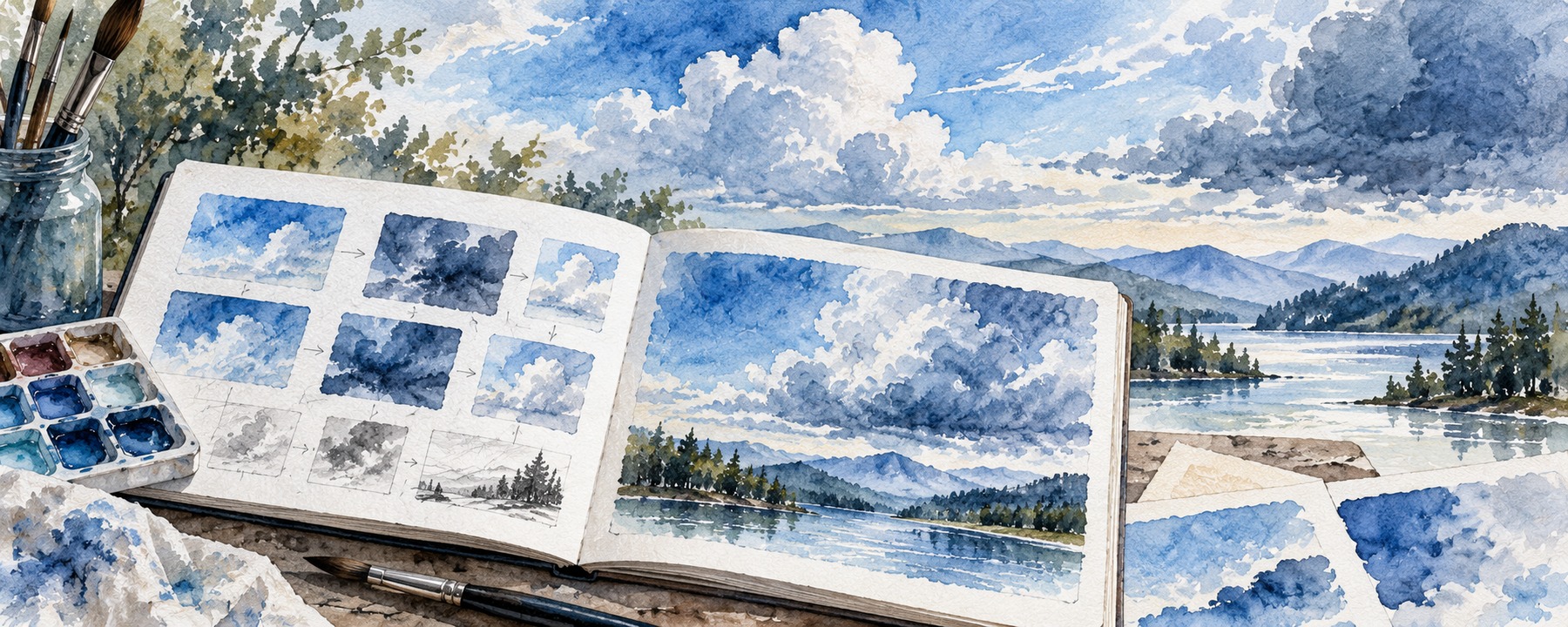
Do not judge final value while the wash is still glossy. Swatch the exact paint and paper you use, let it dry fully, and compare dry with dry rather than relying on one universal “watercolor dries lighter” correction.
“Dries lighter” is useful shorthand—but incomplete
A wet wash can appear richer than the final dry passage. Artists often describe that as lightening, but the visible change may also involve reduced saturation or a small hue shift.
The useful term is drying shift.
Why the appearance changes
While wet, the paint contains substantial water and often a glossy surface. As water evaporates and is absorbed, the optical environment around pigment and paper changes.
The wet appearance is therefore a temporary material state, not a reliable preview of the final color.
Different paints shift differently
There is no safe universal rule such as “paint everything twenty percent darker.” Individual pigments and formulations can shift by different amounts and in different directions.
Paper also affects the final appearance
Whiteness, texture, absorbency and pigment settlement all influence the dry result. Test exact mixtures on the actual paper you intend to use when color matching matters.
Compare dry with dry
If yesterday's painted area is dry and today's mixture is still wet, matching them by eye can mislead you. Make a test swatch, let it dry, then compare the same material state.
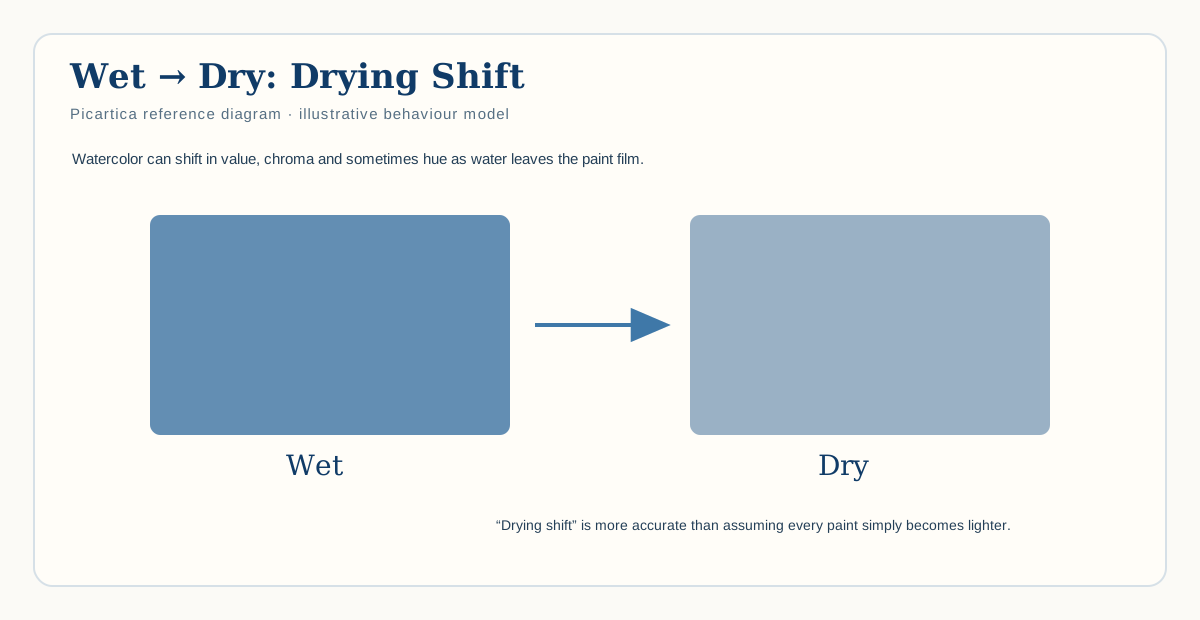
Build a wet/dry reference
Make one pigment at five concentrations, photograph it wet under consistent lighting, then again when fully dry. Repeat for the colors you use most often.
Paint wet. Judge dry.
Sources & verification
Core technical claims in this article were checked against the sources below. Picartica test protocols, editorial judgments and recommendations remain clearly separate from manufacturer claims.
- Canson — Basic concepts for painting with watercolorsManufacturer education
Wet-on-dry, wet-on-wet, wash, graduated wash and glazing definitions; practical wet/dry colour shift note. - Handprint — Watercolor paint drying shiftsIndependent measurement
Measured shifts in lightness, chroma and hue; chroma loss as a major component of drying shift.
Verification status: core technical claims checked against the cited sources. Page structure, internal links and publication markup were re-audited for this release on 6 September 2026.