Paint Behaviour
Transparent vs Opaque Watercolor
Transparency describes how strongly a watercolor layer reveals or conceals what lies underneath. It is a behaviour you can use—not a quality ranking.
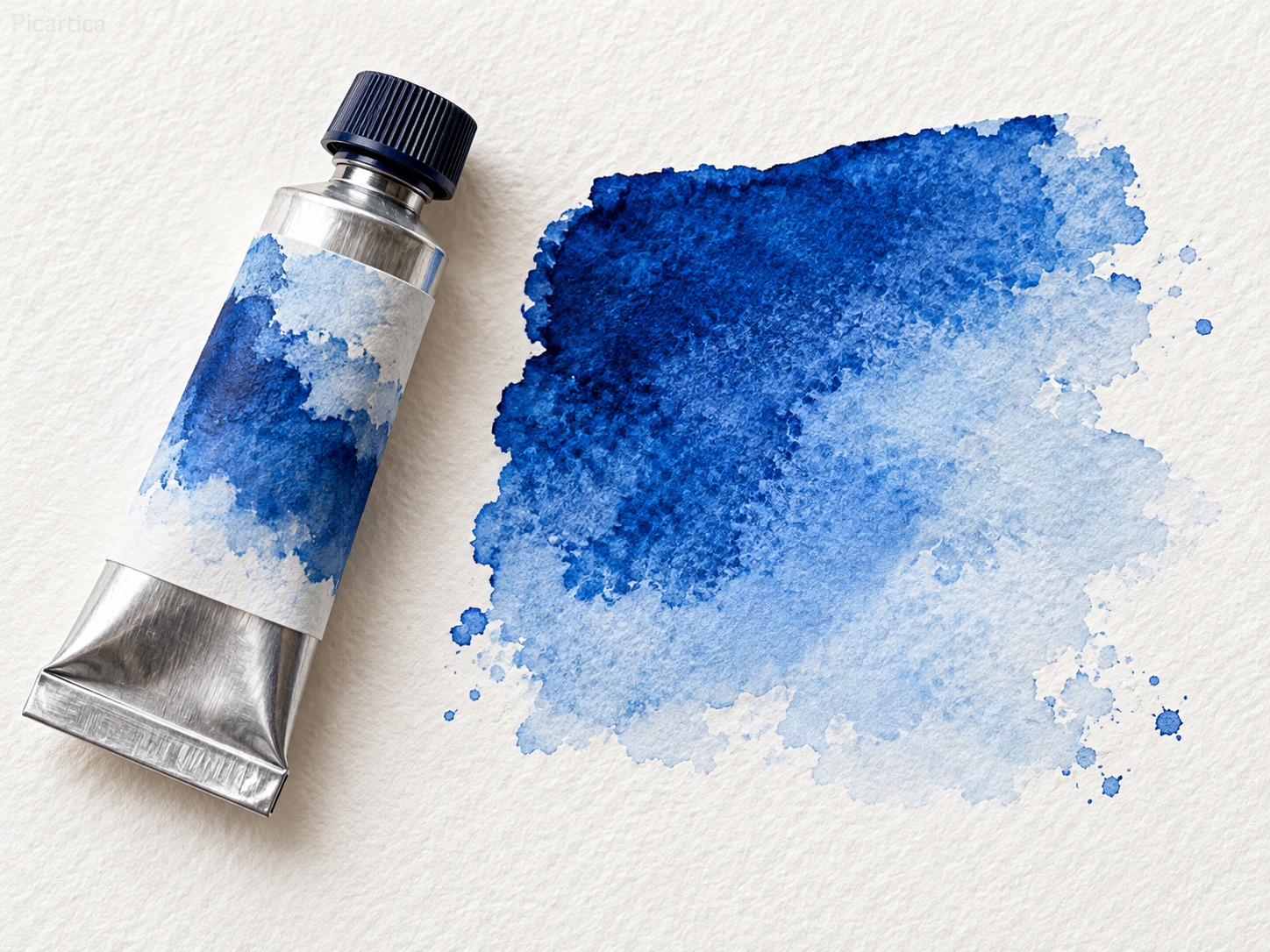
Transparent paint leaves more of the paper or earlier layer visually apparent. Opaque paint covers more strongly. Both behaviours can be useful, and concentration changes how transparent any individual application appears.
What does transparent watercolor mean?
A transparent watercolor allows more of the underlying paper or previous paint layer to remain visually apparent. A more opaque paint conceals the underlying surface more strongly. Between those ends, manufacturers may use categories such as semi-transparent and semi-opaque.
Different manufacturers do not all use exactly the same rating system. Picartica should therefore preserve the original manufacturer terminology in the materials database rather than pretending every scale is perfectly interchangeable.
Transparent does not mean pale
A transparent watercolor can create a very dark passage at high concentration. Likewise, an opaque paint can be diluted into a pale wash. Transparency describes the relationship with the layer underneath; value describes how light or dark the passage appears.
Transparent does not mean weak
Some highly transparent pigments are extremely powerful in mixtures and can also be strongly staining. These are separate properties.
A simple transparency test
Make a waterproof black stripe on watercolor paper and allow it to dry. Paint a consistent swatch across both the white paper and the dark stripe.
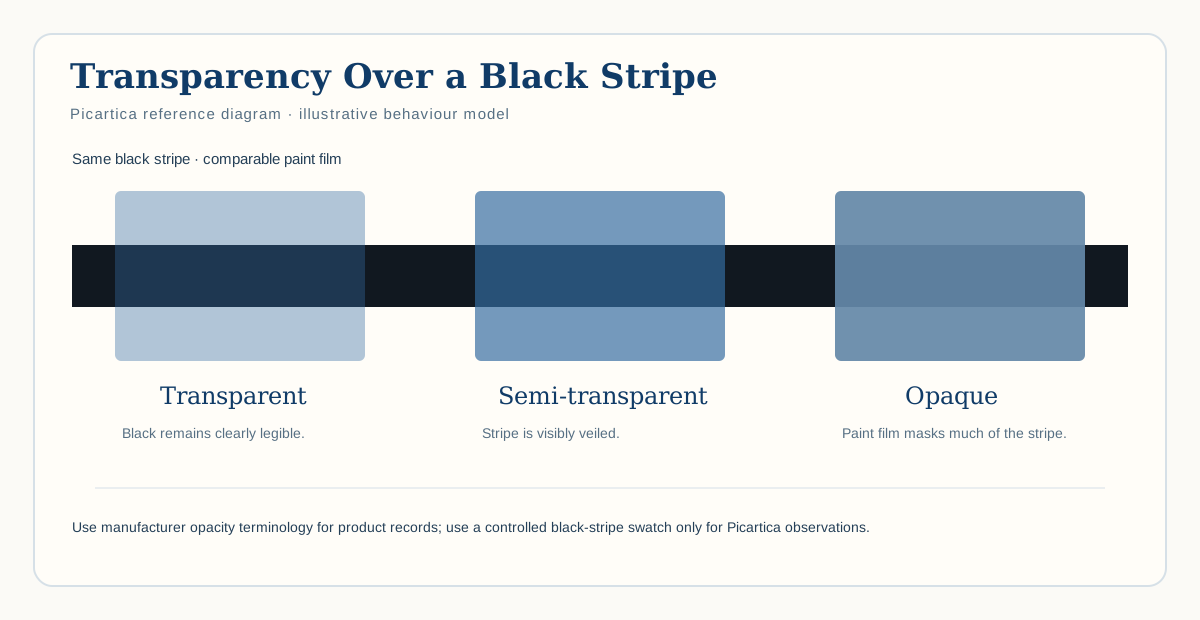
- More transparent: the black stripe remains comparatively clear beneath the watercolor.
- More opaque: the paint visibly veils or covers more of the black.
This is a comparative studio test, not a laboratory measurement. Concentration, paper and application thickness must be kept reasonably consistent.
Why Picartica uses black + white
A swatch on white paper tells you the color. Crossing a dark stripe also shows how strongly the paint conceals an underlying value.
Transparency and glazing
Glazing is one of the clearest situations where transparency matters. A transparent upper layer allows earlier paint to remain visually involved, creating color through separate dry layers rather than only through wet palette mixing.
Opaque or semi-opaque paint can also be layered, but it hides more of the information underneath. That may be exactly what you want in a particular passage.
Transparency does not tell you staining or granulation
| Property | Question it answers |
|---|---|
| Transparency | How much can I see through this painted layer? |
| Staining | How easily can I remove or lighten it after drying? |
| Granulation | Does the pigment settle with visible texture? |
| Lightfastness | How resistant is the color to change under light? |
A transparent paint may granulate strongly. An opaque paint may be relatively easy to lift. These behaviours must be stored and taught separately.
When each behaviour is useful
Choose transparency when…
You want visible underpainting, luminous glazing, layered color or dark passages that retain a sense of depth.
Choose opacity when…
You want stronger covering power, solid shapes, textural contrast or passages that visually separate themselves from earlier layers.
Transparency describes what the paint lets you see through it. It does not tell you whether the paint is good.
Sources & verification
Core technical claims in this article were checked against the sources below. Picartica test protocols, editorial judgments and recommendations remain clearly separate from manufacturer claims.
- DANIEL SMITH — Watercolor for beginnersManufacturer education
Transparency, granulation, staining and lightfastness as distinct watercolour properties; transparency and glazing. - DANIEL SMITH — Watercolor Pigment CharacteristicsManufacturer data
Per-colour lightfastness, staining, granulation, transparency and pigment-code fields.
Verification status: core technical claims checked against the cited sources. Page structure, internal links and publication markup were re-audited for this release on 6 September 2026.